Point of view (POV)
Problem Statement
Because People Matter had a UX maturity level close to phase 3, the team was given time, autonomy, and space to work properly. However, former Snagajobs executives were less familiar with this way of working, which created tension and additional pressure on the UX team. As UX Lead, my role was to protect the team’s working environment while negotiating production and delivery timelines, and creating the conditions needed for thoughtful design work.
Many UX techniques were unfamiliar to former Snagajobs stakeholders, so my strategy focused on explaining and demonstrating each method at the right moment, always tied to a concrete problem. This helped make the value of UX more tangible and actionable, which is essential for supporting the growth of UX maturity within an organization.
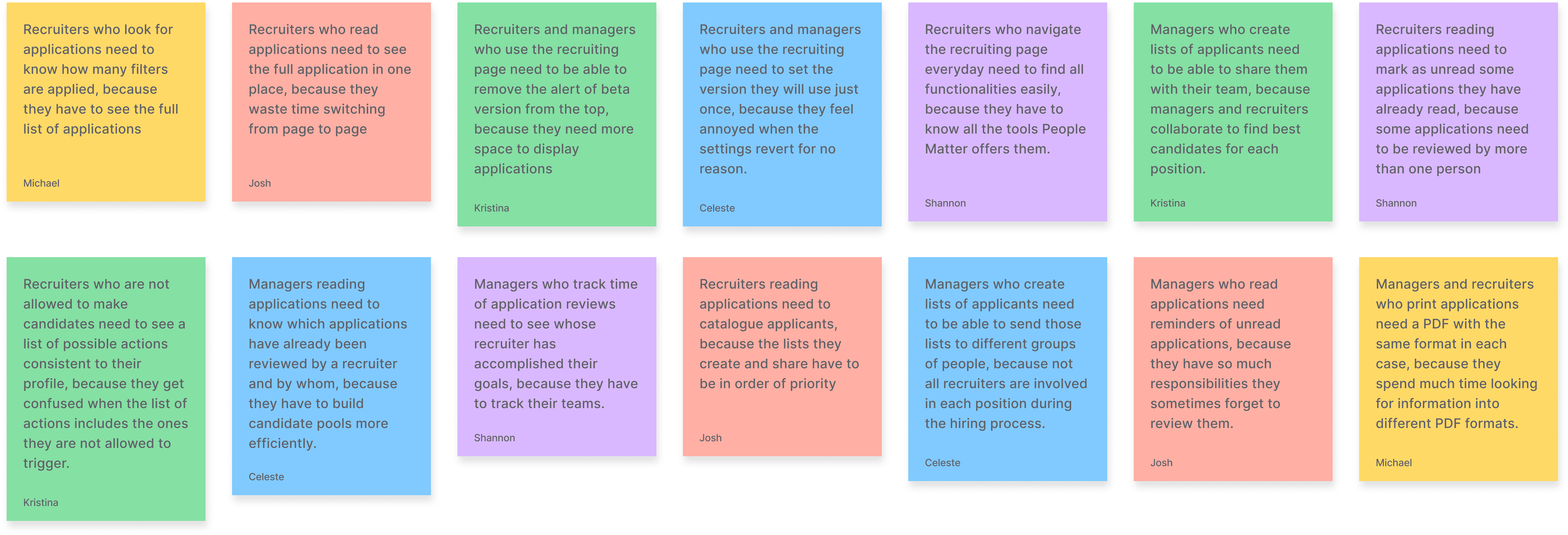
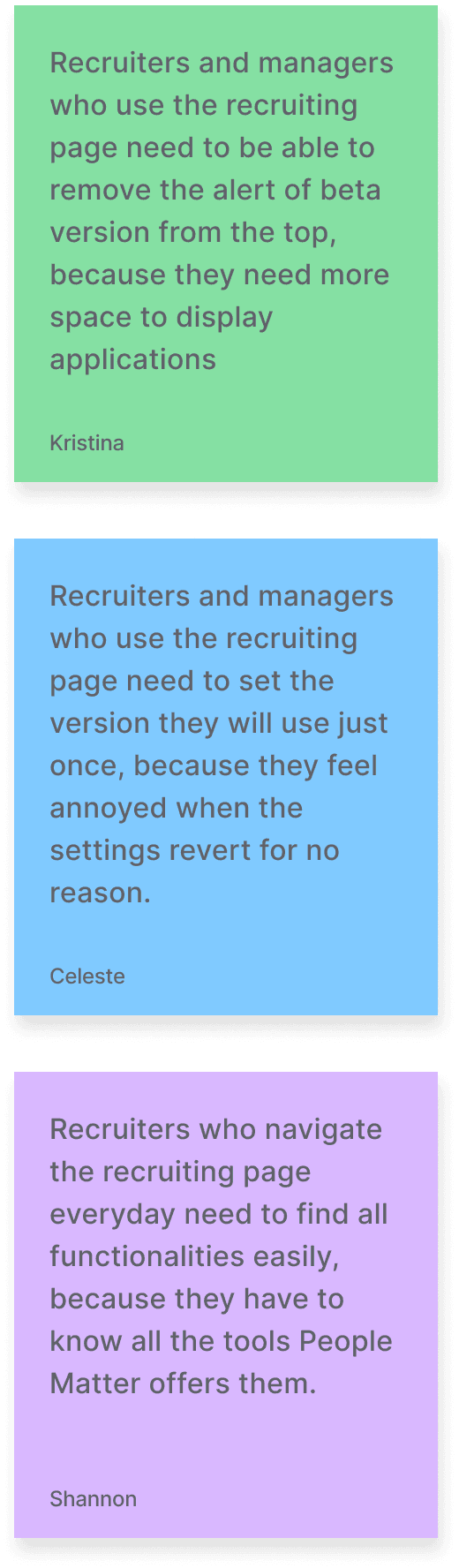
The Point of View technique, in particular, was very well received. Once the framework was explained, stakeholders quickly understood how to frame a POV and how to shift the focus from business constraints, technology, or product features to the users themselves and their needs. As in previous projects, I used and shared a simple structure with the team: User… needs… because….
After reviewing the research insights, I worked closely with the Product Owner, managers, and business representatives to shape as many relevant POVs as possible. This collaborative process helped align perspectives and created a strong foundation for the next stages of the design process.
Because People Matter had a UX maturity level close to phase 3, the team was given time, autonomy, and space to work properly. However, former Snagajobs executives were less familiar with this way of working, which created tension and additional pressure on the UX team. As UX Lead, my role was to protect the team’s working environment while negotiating production and delivery timelines, and creating the conditions needed for thoughtful design work.
Many UX techniques were unfamiliar to former Snagajobs stakeholders, so my strategy focused on explaining and demonstrating each method at the right moment, always tied to a concrete problem. This helped make the value of UX more tangible and actionable, which is essential for supporting the growth of UX maturity within an organization.
The Point of View technique, in particular, was very well received. Once the framework was explained, stakeholders quickly understood how to frame a POV and how to shift the focus from business constraints, technology, or product features to the users themselves and their needs. As in previous projects, I used and shared a simple structure with the team: User… needs… because….
After reviewing the research insights, I worked closely with the Product Owner, managers, and business representatives to shape as many relevant POVs as possible. This collaborative process helped align perspectives and created a strong foundation for the next stages of the design process.