The How Might We questions have always been one of my preferred ways to bridge the Define and Ideate phases. The method naturally encourages teams to step away from preconceived solutions and reopen the problem space with curiosity.
At this stage of the project, collaboration with the former Snagajobs stakeholders was particularly delicate. To take care of the design team and ensure a safe space for ideation, I chose to facilitate the POV and HMW sessions myself, keeping them separate from the broader product discussions. My intention was to protect the designers from unnecessary tension and allow them to focus fully on exploration and creativity.
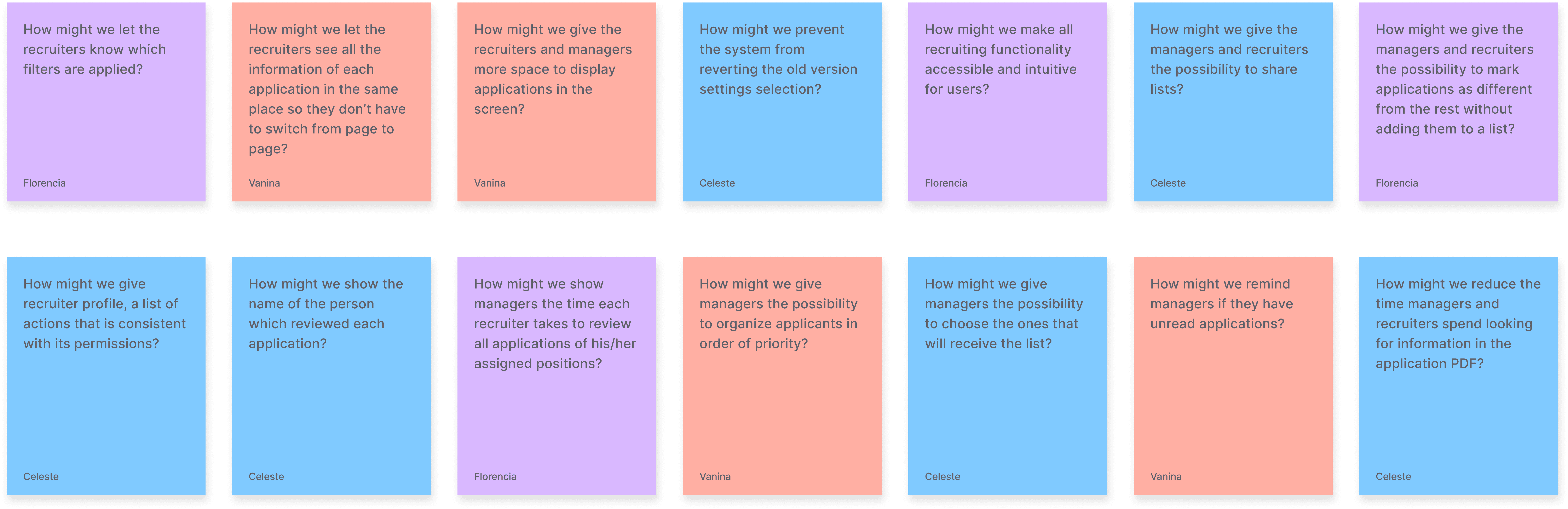
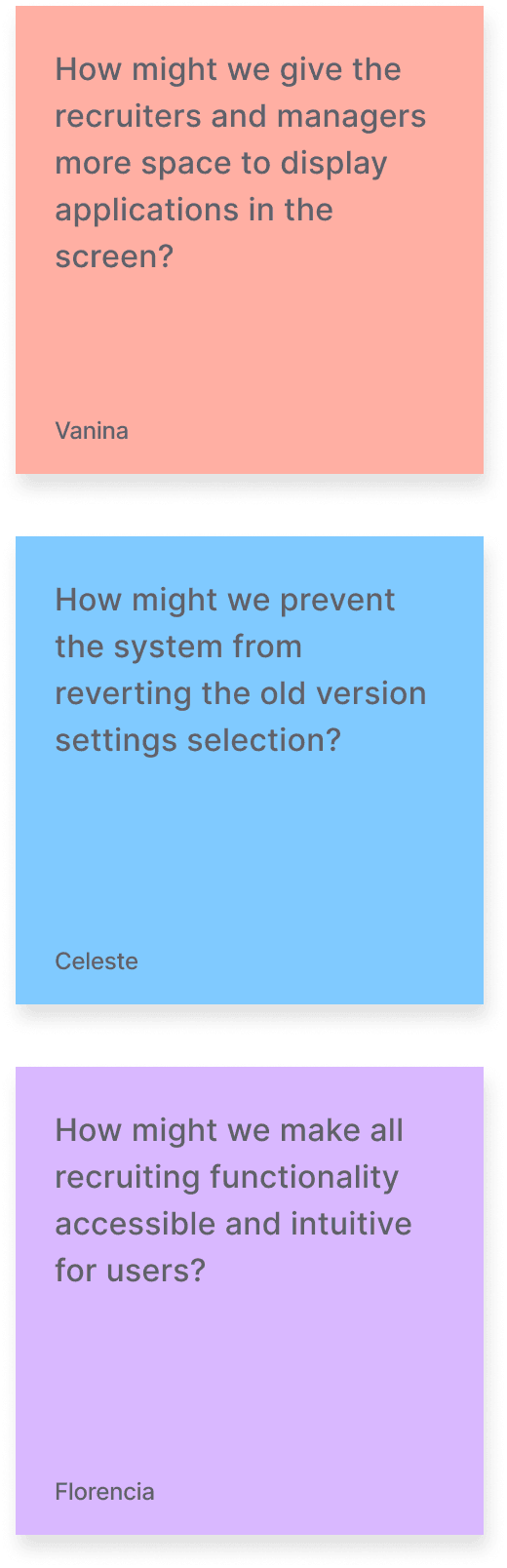
After each product meeting, I shared the key takeaways and reviewed all the POVs with the design team. From there, we translated those POVs into How Might We questions together. The exercise flowed naturally: since the designers had not been directly exposed to the solution-oriented discussions from the product meetings, they approached the HMWs with fresh perspectives, free from assumptions. This helped keep the ideation grounded in user needs rather than in early or imposed answers.
The How Might We questions have always been one of my preferred ways to bridge the Define and Ideate phases. The method naturally encourages teams to step away from preconceived solutions and reopen the problem space with curiosity.
At this stage of the project, collaboration with the former Snagajobs stakeholders was particularly delicate. To take care of the design team and ensure a safe space for ideation, I chose to facilitate the POV and HMW sessions myself, keeping them separate from the broader product discussions. My intention was to protect the designers from unnecessary tension and allow them to focus fully on exploration and creativity.
After each product meeting, I shared the key takeaways and reviewed all the POVs with the design team. From there, we translated those POVs into How Might We questions together. The exercise flowed naturally: since the designers had not been directly exposed to the solution-oriented discussions from the product meetings, they approached the HMWs with fresh perspectives, free from assumptions. This helped keep the ideation grounded in user needs rather than in early or imposed answers.