Design systems
Design systems
Old, Beta & Fuse
Old, Beta & Fuse
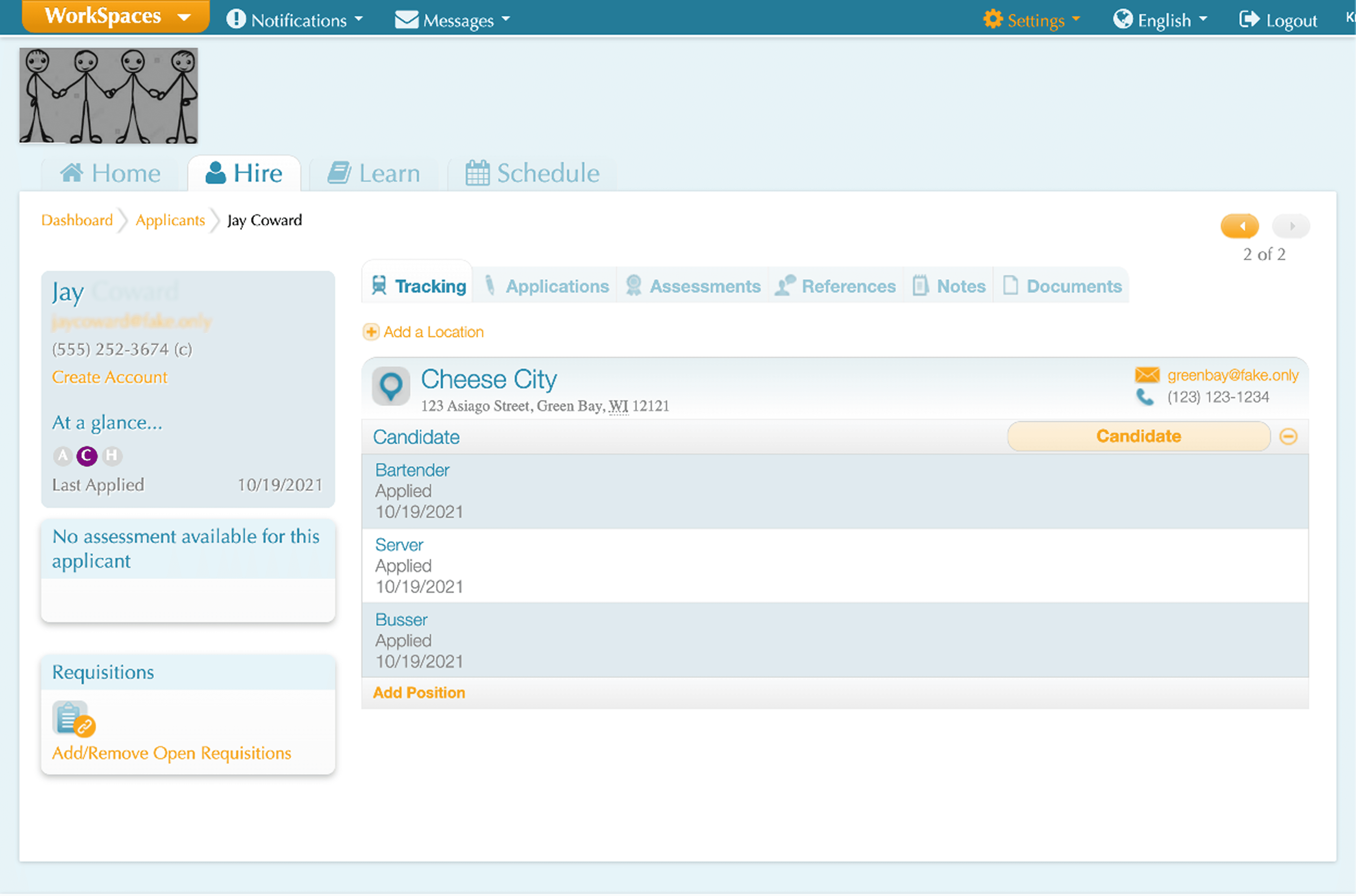
When I joined the project, People Matter was working with three different design systems within the same product. The first one, which we referred to as Old, had been created by developers back when the product was still part of Snagajobs. It looked dated and lacked consistency—its components didn’t behave as part of a cohesive system, and interfaces built with it were hard to scan and navigate due to their complexity.
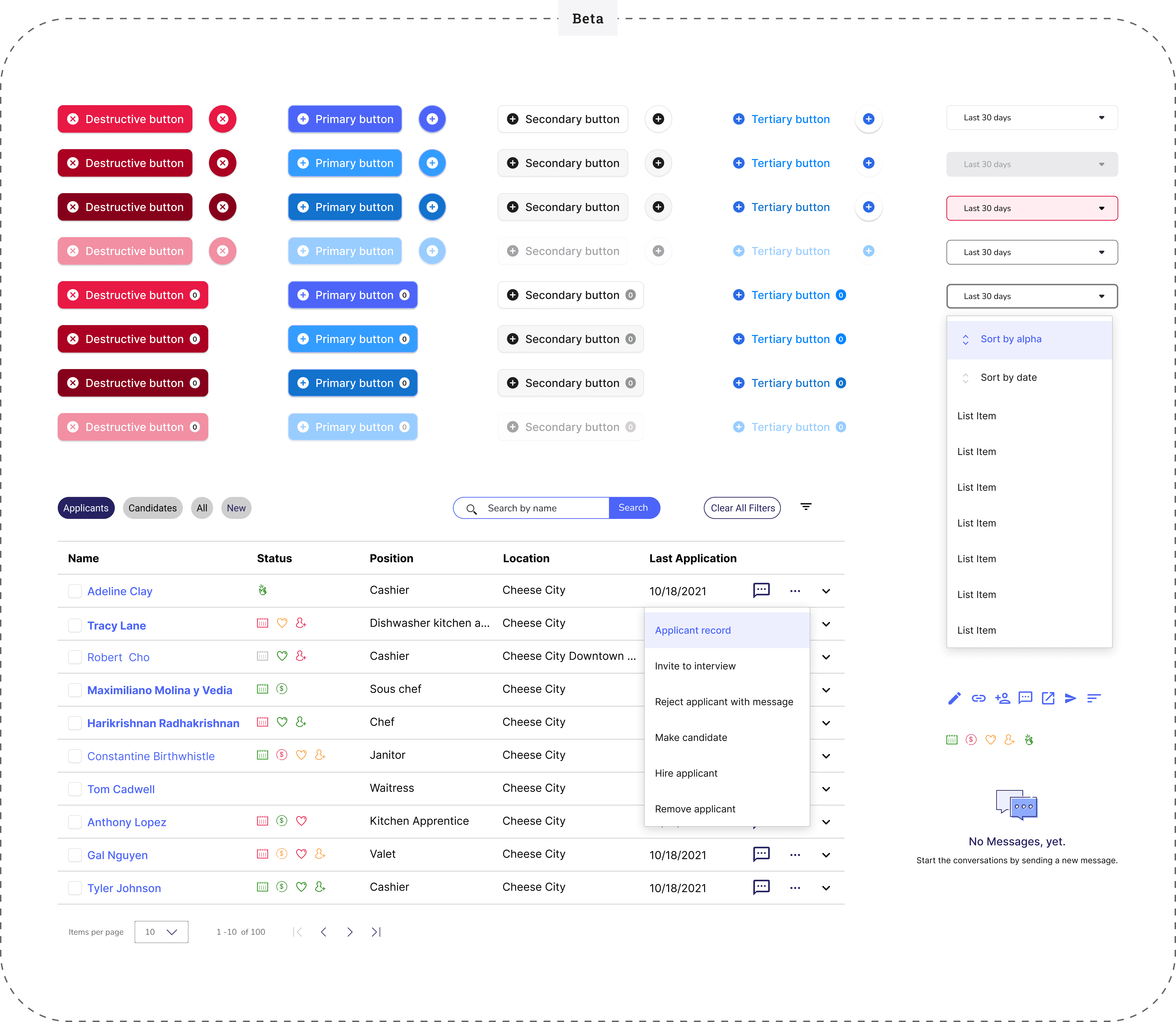
Beta emerged as a response from the UX team to those issues. It was designed from scratch based on research insights, benchmarks, and heatmaps from the existing interface. The goal was to bring clarity, consistency, and a more user-centered approach to the product’s UI.
After several review rounds involving design, technology, product, and business stakeholders, Beta was approved and implementation began. Some functionalities were released following this system. However, as development progressed, business priorities shifted. The need for a design system that could be built and scaled faster became more pressing, which led to a change in direction.
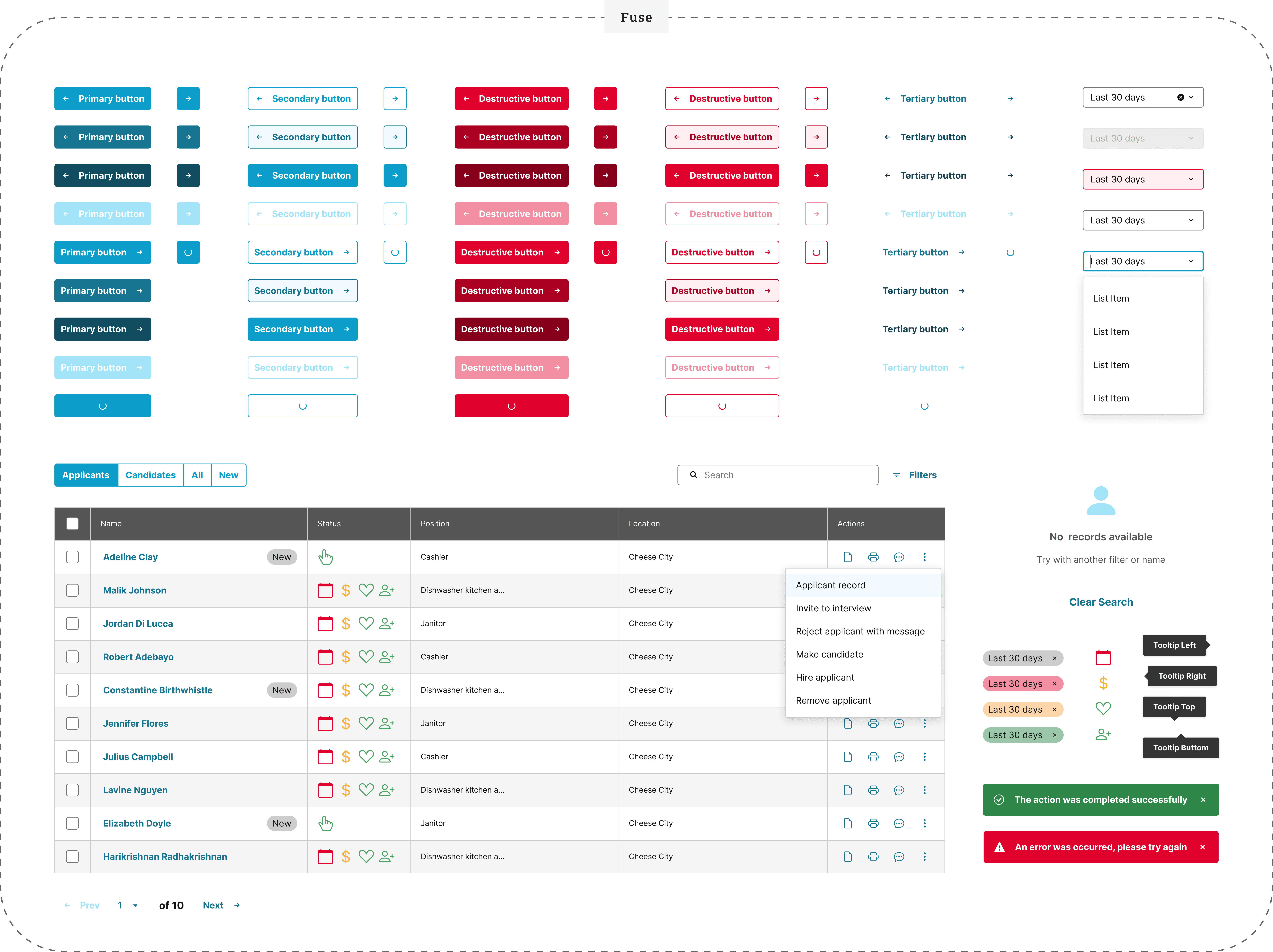
That shift resulted in Fuse. Fuse is a design system based on Base Web and was created by an external UI team rather than the People Matter UX team. Unlike Beta, its primary driver was speed of implementation, which introduced a different set of constraints and trade-offs that would later impact the product experience.
When I joined the project, People Matter was working with three different design systems within the same product. The first one, which we referred to as Old, had been created by developers back when the product was still part of Snagajobs. It looked dated and lacked consistency—its components didn’t behave as part of a cohesive system, and interfaces built with it were hard to scan and navigate due to their complexity.
Beta emerged as a response from the UX team to those issues. It was designed from scratch based on research insights, benchmarks, and heatmaps from the existing interface. The goal was to bring clarity, consistency, and a more user-centered approach to the product’s UI.
After several review rounds involving design, technology, product, and business stakeholders, Beta was approved and implementation began. Some functionalities were released following this system. However, as development progressed, business priorities shifted. The need for a design system that could be built and scaled faster became more pressing, which led to a change in direction.
That shift resulted in Fuse. Fuse is a design system based on Base Web and was created by an external UI team rather than the People Matter UX team. Unlike Beta, its primary driver was speed of implementation, which introduced a different set of constraints and trade-offs that would later impact the product experience.
Working with Fuse
Working with Fuse
When speed reshapes decisions
When speed reshapes decisions
The shift in direction had a strong impact on the team. While the design system approach changed, the quarterly delivery deadlines remained the same. Technology, product, and design teams all raised concerns, explaining how the decision affected both the quality of the work and production timelines.
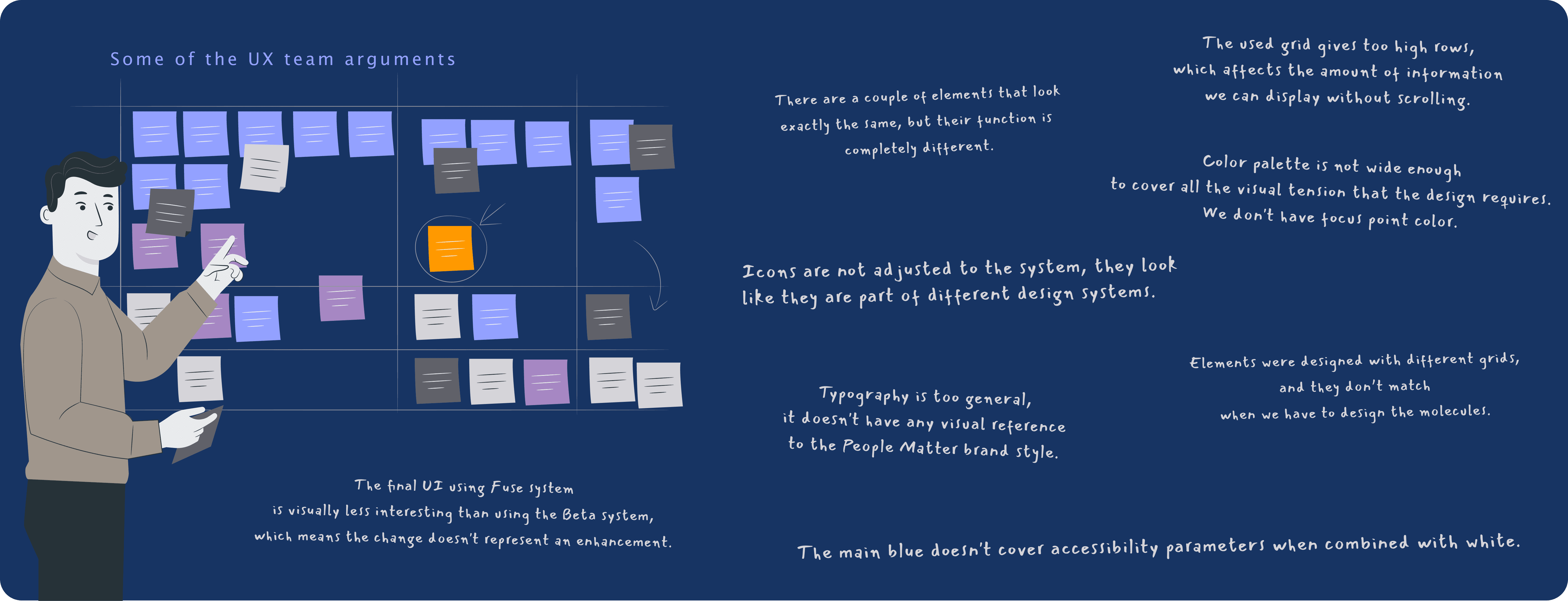
Within those discussions, the UX perspective was often the hardest to convey to business stakeholders. The core challenge with Fuse was not the system itself, but the context in which it was created. Unlike previous efforts, its design was driven primarily by speed of implementation rather than by user insights gathered through research.
As a result, many of its components were not well suited to the type and volume of content the product needed to support. Spacing, color palette, typography, and iconography didn’t scale well for complex interfaces. We discussed these issues extensively in long review sessions, but their impact only became fully visible once the first high-fidelity prototypes were ready. At that point, it was clear the interface felt generic and disconnected from People Matter’s brand identity.
By then, deadlines were too close to allow for a redesign or deeper revision of the system. We moved forward with Fuse, aware of its limitations, and with a clearer understanding of the trade-offs made between speed, coherence, and experience.
The shift in direction had a strong impact on the team. While the design system approach changed, the quarterly delivery deadlines remained the same. Technology, product, and design teams all raised concerns, explaining how the decision affected both the quality of the work and production timelines.
Within those discussions, the UX perspective was often the hardest to convey to business stakeholders. The core challenge with Fuse was not the system itself, but the context in which it was created. Unlike previous efforts, its design was driven primarily by speed of implementation rather than by user insights gathered through research.
As a result, many of its components were not well suited to the type and volume of content the product needed to support. Spacing, color palette, typography, and iconography didn’t scale well for complex interfaces. We discussed these issues extensively in long review sessions, but their impact only became fully visible once the first high-fidelity prototypes were ready. At that point, it was clear the interface felt generic and disconnected from People Matter’s brand identity.
By then, deadlines were too close to allow for a redesign or deeper revision of the system. We moved forward with Fuse, aware of its limitations, and with a clearer understanding of the trade-offs made between speed, coherence, and experience.
Old UI
Beta UI
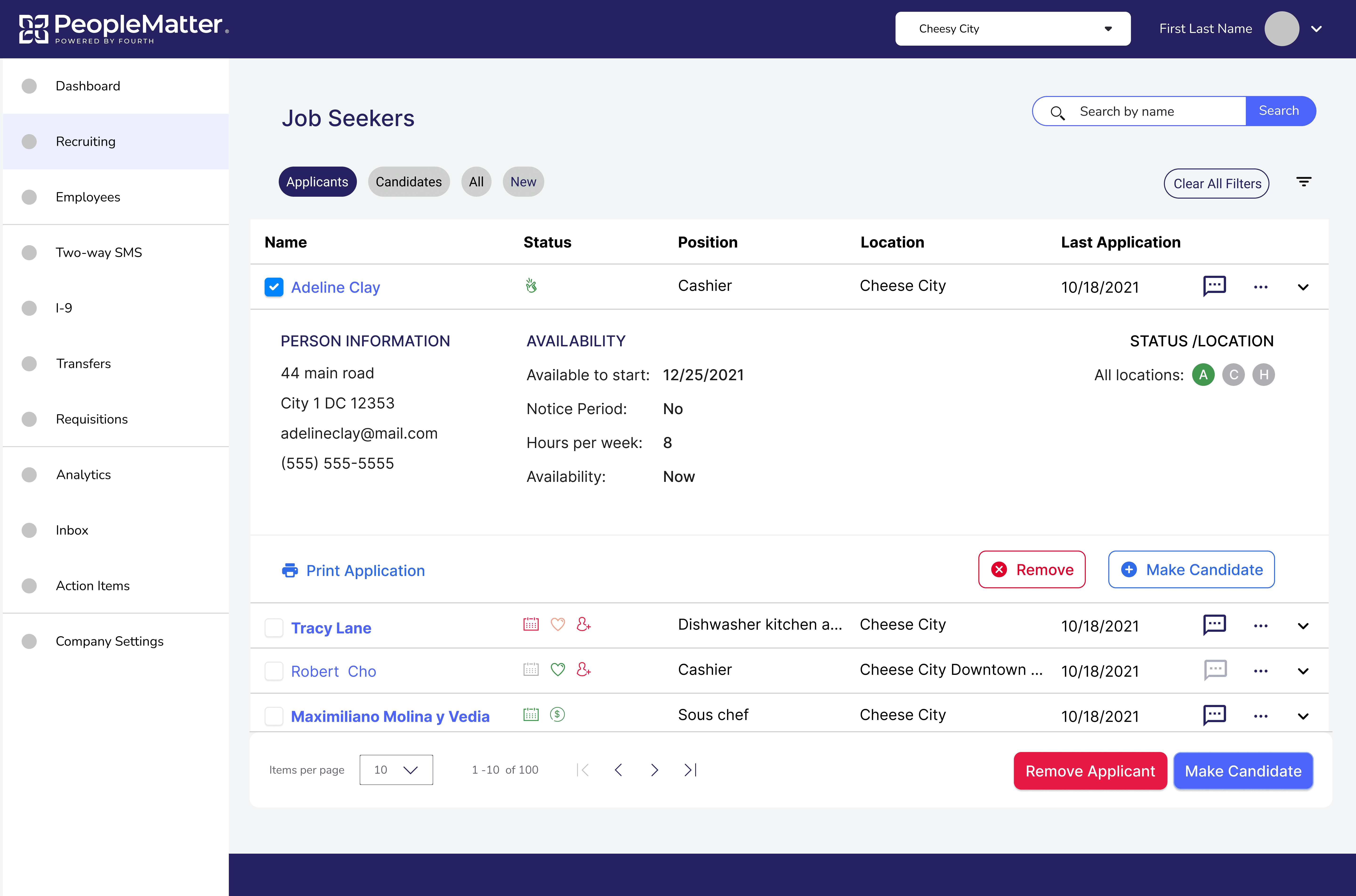
Fuse UI
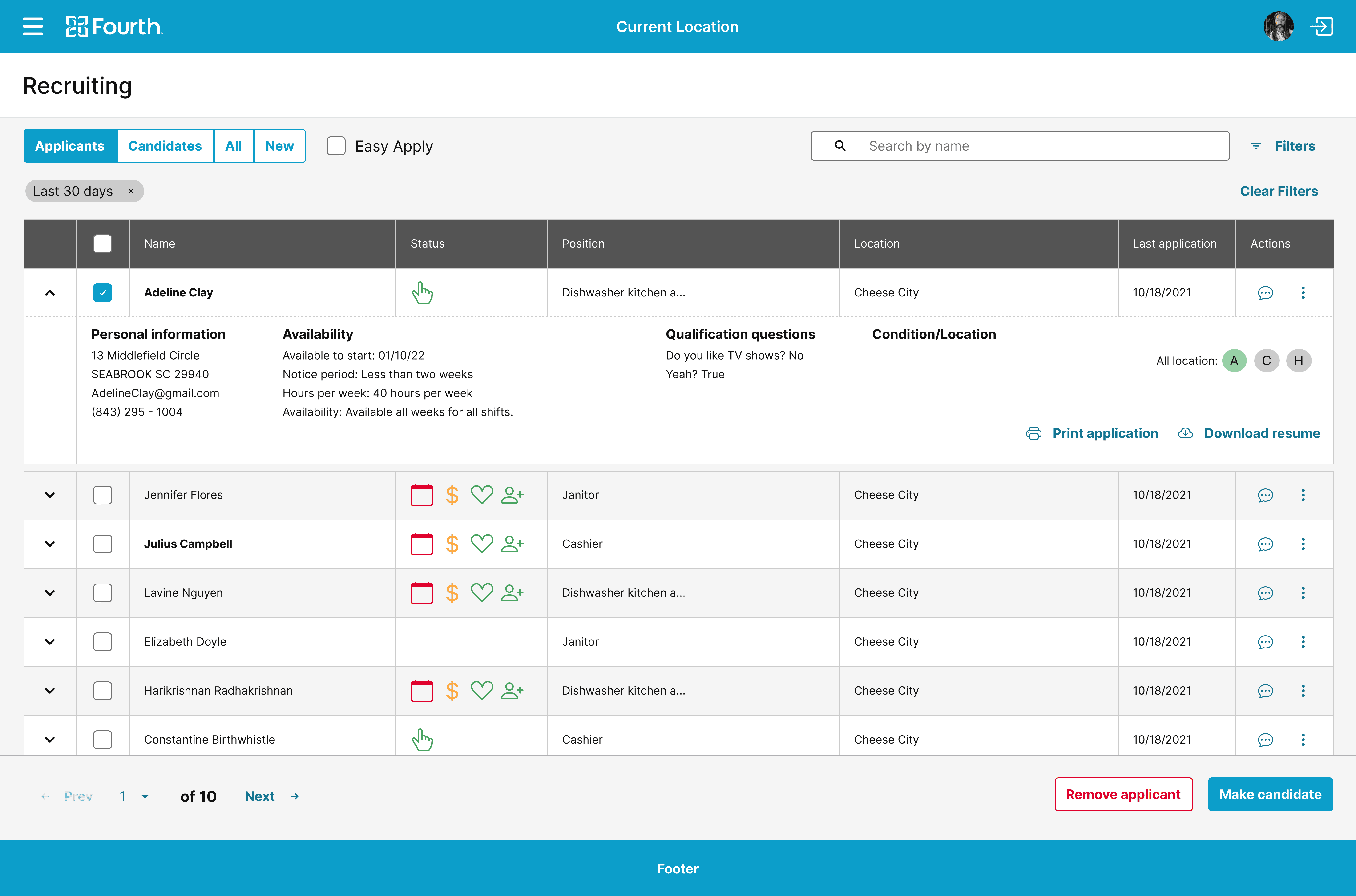
Old UI
Beta UI
Fuse UI
Old UI
Beta UI
Fuse UI
Old UI
Beta UI
Fuse UI
Old UI
Beta UI
Fuse UI